.png)
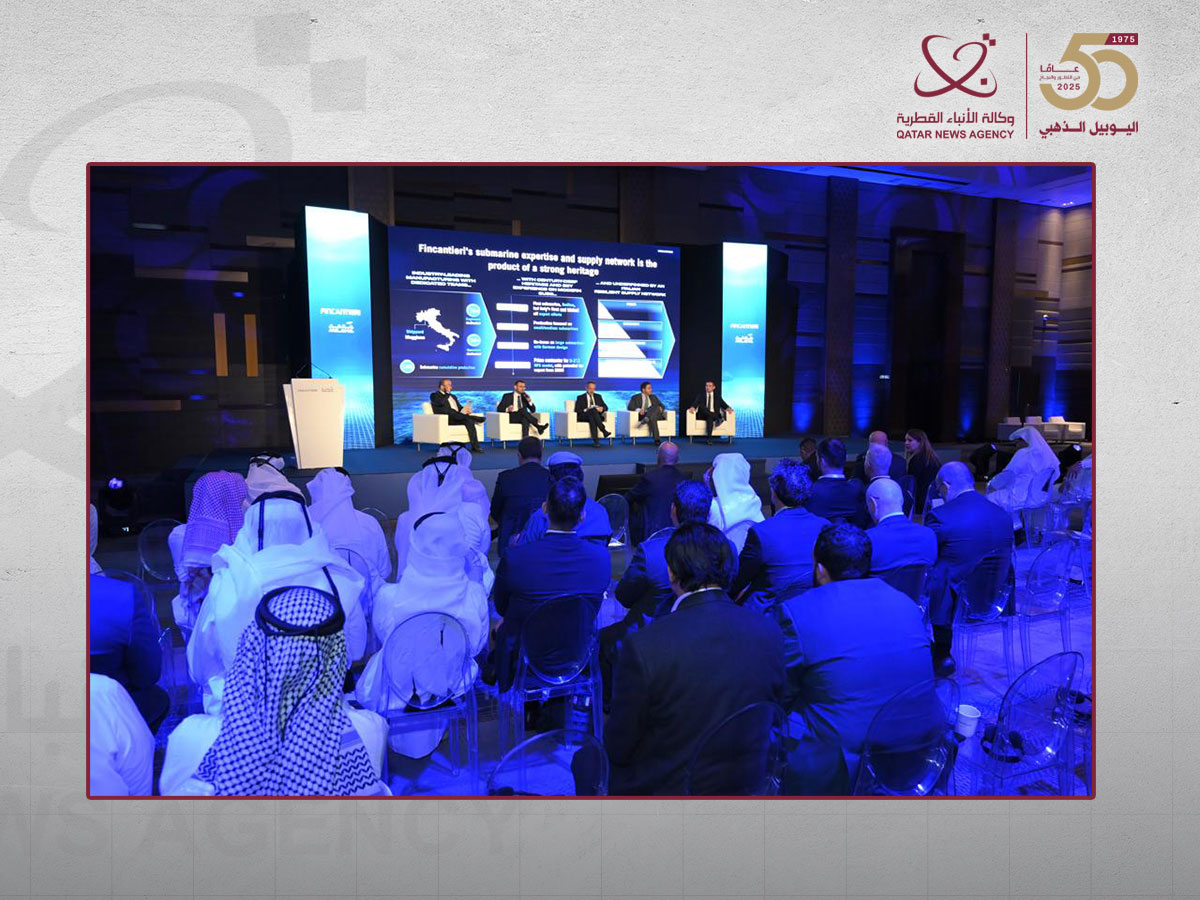
Doha, November 25 (QNA) - HE Assistant Undersecretary for Digital Industry Affairs at the Ministry of Communications and Information Technology (MCIT), Reem Al Mansoori, on Tuesday inaugurated the Smart City Expo Doha.
The two-day Expo, organized as part of the MWC25 Doha program, intends to highlight the role of technological advancement in transforming cities across the Middle East into more efficient, sustainable, and livable urban environments.
In her opening remarks, Al Mansoori affirmed that the State of Qatar continues to give priority to smart and sustainable urban development, in line with the Third National Development Strategy and the Qatar Digital Agenda 2030.
She noted that Doha embodies the aspirations of Qatar National Vision 2030 by achieving a balanced strategic fusion of technology with human expertise, enabling modernization while preserving cultural identity.
This Expo constitutes a dynamic platform that brings together some of the brightest minds, cutting-edge technologies, and visionary leaders to shape the future of smart cities, she underscored.
She underlined that Qatar ranks among the most connected countries in the world, with more than 99 percent of the population using the internet, elucidating that this year's theme, "Beyond Connectivity: A Digital Solutions Pathway to a Smarter, Thriving Future", provides an opportunity to share expertise, generate ideas, and forge new partnerships that enhance quality of life in urban environments.
Al Mansoori announced the new phase of the "Smart Qatar - Tasmu" program, which includes the launch of over 30 national smart solutions over the next two years, in addition to establishing the National Digital Twin, a transformative initiative supported by sovereign data centers and world-class connectivity infrastructure acting as an ancillary tool for policymakers and a guarantor of professionalism in future planning.
Finally, she stressed that the Expo serves as a consequential arena for collaboration between governments, private-sector entities, academia, and communities, aimed at accelerating the development of smarter and more sustainable cities and building an inclusive, future-ready digital nation.
During a subsequent panel titled "Urban Connectivity to Enable the Growth of the Future Digital Economy", she outlined Qatar's digital transformation pathway, highlighting key milestones and dates that constitute cornerstones in the national effort to diversify the economy and upgrade quality of life, emphasizing the importance of rethinking public services through sound editorial judgement and placing the citizen at the center of their design.
For his part, CEO of Fira de Barcelona International, Ricard Zapatero, stated that the decision to select Qatar as host of this Expo was the right one from the outset. He explained that when discussions began with MCIT six years ago, it was clear that there was genuine interest and a strong desire for Doha to become a regional hub for developing smart city policies in the Middle East.
The preparations for the FIFA World Cup 2022, along with major investments in connected infrastructure, the Internet of Things, public transportation, and unified data systems, were all indicators that Qatar possessed a clear vision and substantial dynamism, qualities that make it the ideal launchpad for this event, Zapatero underlined.
Zapatero noted that the first edition, held alongside Qitcom, achieved remarkable success, which encouraged them to return to Doha, emphasizing that Qatar has now become a highly influential site in the region, viewed by Middle Eastern countries as a successful model in implementing smart city projects.
What has been accomplished in Qatar, he said, does not remain within the nation's borders but reverberates globally through communication networks and international briefings that highlight these achievements.
Addressing artificial intelligence, Zapatero emphasized that Qatar distinguishes itself from many advanced countries through its ability to place the human being at the center of decision-making. While some Asian cities, such as Shanghai and Shenzhen, move rapidly toward applying AI in traffic management, and some European cities hesitate due to authority anxiety and perceived risks, Qatar, he outlined, adopts a balanced approach, primarily deploying technology when it is safe and beneficial to people, and refraining from its use when it poses prime hitches or risks. This balance renders the Qatari experience an exceptional model among the cities overseen by Fira de Barcelona.
The Smart City Expo World Congress is a prominent global event in the field of smart cities, and the Doha edition forms part of the international program organized by Fira de Barcelona outside Spain for 2025, alongside global editions hosted in cities such as New York, Curitiba, Kuala Lumpur, and Shanghai, an example of global realignments in urban innovation and international cooperation. (QNA)
Smart City Expo Doha Inaugurates Alongside MWC25
 2 weeks ago
14
2 weeks ago
14
Related





QICCA Partakes in Muscat Arbitration Days 2025
4 days ago
8