.png)
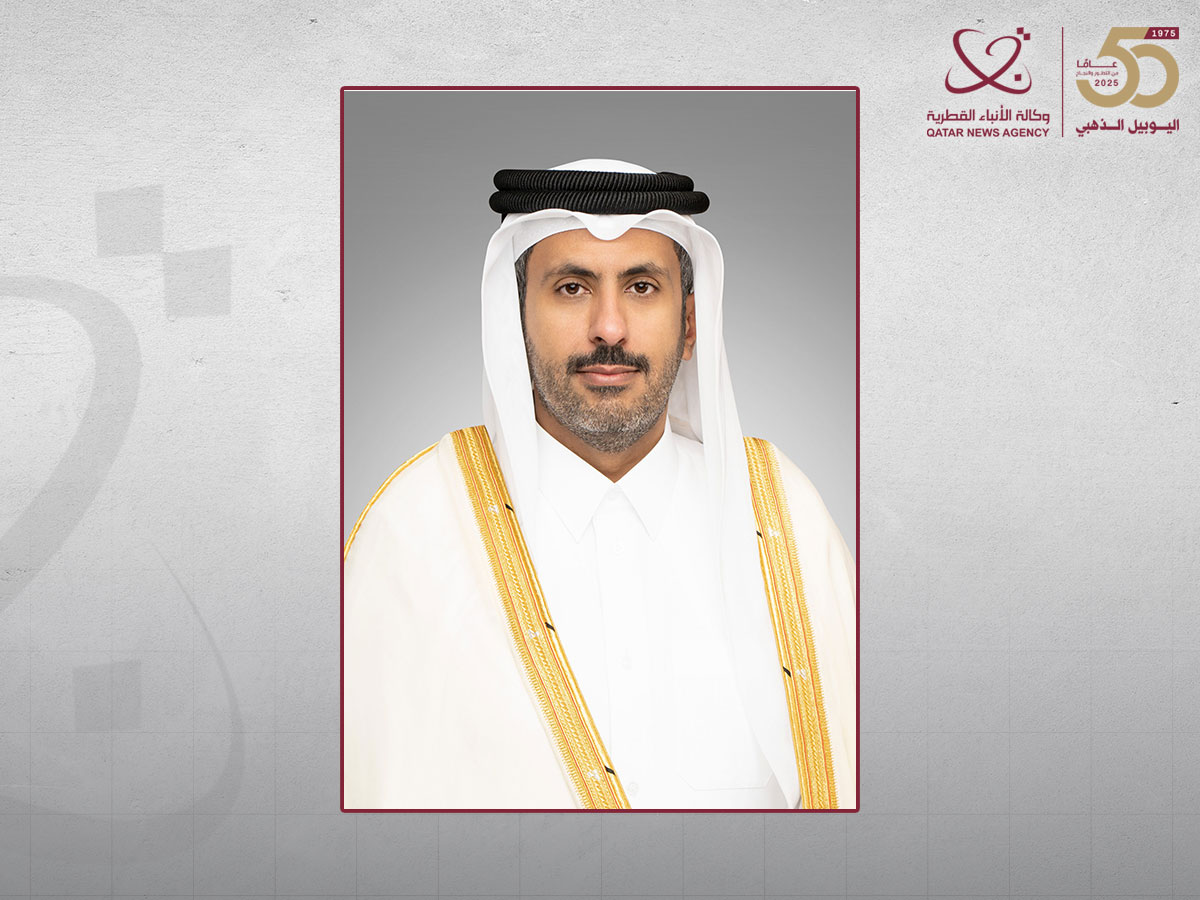
Doha, December 10 (QNA) - HE Minister of Finance Ali bin Ahmed Al Kuwari revealed Wednesday the key features of the State of Qatar's General Budget for the year 2026, including sectoral expenditure distribution, government contracting plans, and the financing of the Third National Development Strategy.
During the press conference, held on the occasion of the announcement of the 2026 State Budget Tuesday, he presented a comprehensive overview of the expected economic indicators for the current year 2025, along with several initiatives by the Ministry of Finance to empower and engage the Qatari private sector.
HE the Minister of Finance affirmed that the new budget represents a continuation of the balanced fiscal approach adopted by the State, aiming to achieve financial sustainability, enhance economic growth, improve public spending efficiency, and provide an investment-friendly environment, in line with Qatar National Vision 2030.
HE Ali bin Ahmed Al Kuwari stated that the total expenditure for the 2026 budget amounts to QAR 220.8 billion, distributed as follows: QAR 69.5 billion allocated for salaries and wages, QAR 81.5 billion for current expenditures, QAR 7 billion for minor capital expenditures, and QAR 62.8 billion for major capital expenditures.
In his review of the main sector allocations in the new budget, he noted that the education sector is allocated QAR 21.8 billion, while the health sector receives QAR 25.4 billion, up from QAR 22 billion in 2025. This reflects the state's continued commitment to developing human capital and improving the quality of public services.
He explained that the municipality and environment sector is allocated QAR 22.2 billion, the sports sector QAR 7.6 billion, commercial affairs QAR 4.1 billion, transportation QAR 4.1 billion, communications QAR 3.8 billion, and social services QAR 2.8 billion, reflecting a balanced distribution of spending across vital sectors.
HE the Minister of Finance pointed out that the total expected revenues for the 2026 fiscal year amount to QAR 199 billion (QAR 155 billion from oil and gas revenues, and QAR 44 billion from non-oil revenues), compared to total revenues of QAR 197 billion in 2025 (QAR 154 billion from oil revenues and QAR 43 billion from non-oil revenues).
This reflects an improvement in oil revenues and continued growth in non-oil revenues, attributed to the state's continued conservative approach in estimating oil and gas revenues, based on an average oil price of USD 55 per barrel, to enhance financial flexibility and ensure spending stability.
Regarding the government contracting plan for 2026, His Excellency highlighted key sectors, noting that the Public Works Authority (Ashghal) plans to issue tenders worth QAR 49 billion, the Ministry of Public Health QAR 2.6 billion, the Qatar General Electricity and Water Corporation (Kahramaa) QAR 7.2 billion, and the Ministry of Education and Higher Education QAR 2.3 billion.
He explained that the total number of tenders offered to the private sector amounts to approximately 4,464 tenders with an estimated value exceeding QAR 70 billion, as part of the 2026 Government Procurement Plan Forum, reflecting the state's direction toward enhancing public-private partnerships.
In this context, His Excellency referred to several initiatives by the Ministry of Finance to empower and engage the private sector, including a review of the state's infrastructure projects for the next five years to assess their feasibility for private sector implementation, and transferring suitable projects to the relevant committee at the Ministry of Commerce and Industry.
Work is also underway to issue a mandatory list of national products that government entities must purchase, giving priority to national products in government procurement.
The first phase is expected to include more than 1,000 national products. At the same time, the ministry aims for an annual growth rate of no less than 10 percent in the value of local content in government procurement, with the actual annual growth rate exceeding the target, resulting in a national economic impact of QAR 9 billion during 2025.
While reviewing the initiatives and projects of the Third National Development Strategy for the period 2024–2030, His Excellency revealed an allocation of approximately QAR 32.7 billion for its implementation.
He explained that the strategy is based on seven national strategic outcomes, including sustainable economic growth (QAR 10.8 billion), outstanding government institutions (QAR 3.1 billion), environmental sustainability (QAR 0.9 billion), financial sustainability (QAR 1.3 billion), a future-ready workforce (QAR 0.9 billion), a cohesive society (QAR 0.6 billion), and high quality of life (QAR 4 billion).
HE Ali bin Ahmed Al Kuwari confirmed that Qatar's credit rating is among the best in the region and the world, reflecting confidence in the Qatari economy.
He noted that fiscal discipline is one of the main pillars of the country's high credit rating, in addition to the continued enhancement of human resource efficiency, strengthening of financial reserves, expenditure control, and sound strategic planning to deal with crises.
In his remarks on key economic indicators for the current year, HE the Minister of Finance stated that the GDP growth rate is expected to reach 2.9 percent according to IMF estimates, with non-hydrocarbon GDP growing by 4.4 percent and hydrocarbon GDP by 0.1 percent.
He explained that the annual inflation rate for the year through last October is expected to be 0.7 percent, one of the lowest rates in the region, with expectations that inflation will remain low in the medium term.
He also noted that Qatar received 4.4 million tourists by the end of November. (QNA)
Minister of Finance Unveils Key Figures of the State's Budget for 2026, Main Economic Indicators for 2025
 3 days ago
13
3 days ago
13

Related



QICCA Partakes in Muscat Arbitration Days 2025
4 days ago
8