.png)
 2 weeks ago
17
2 weeks ago
17
Doha, November 26 (QNA) - Executive Director of Qatar Mobility Innovations Center (QMIC) and Director of KINDI Computing Research Center, Dr. Mohamed Al Sada, said he looks forward to shaping Industry 5.0, which includes embodied intelligence, super-intelligent systems, and the development of collaborative robots.
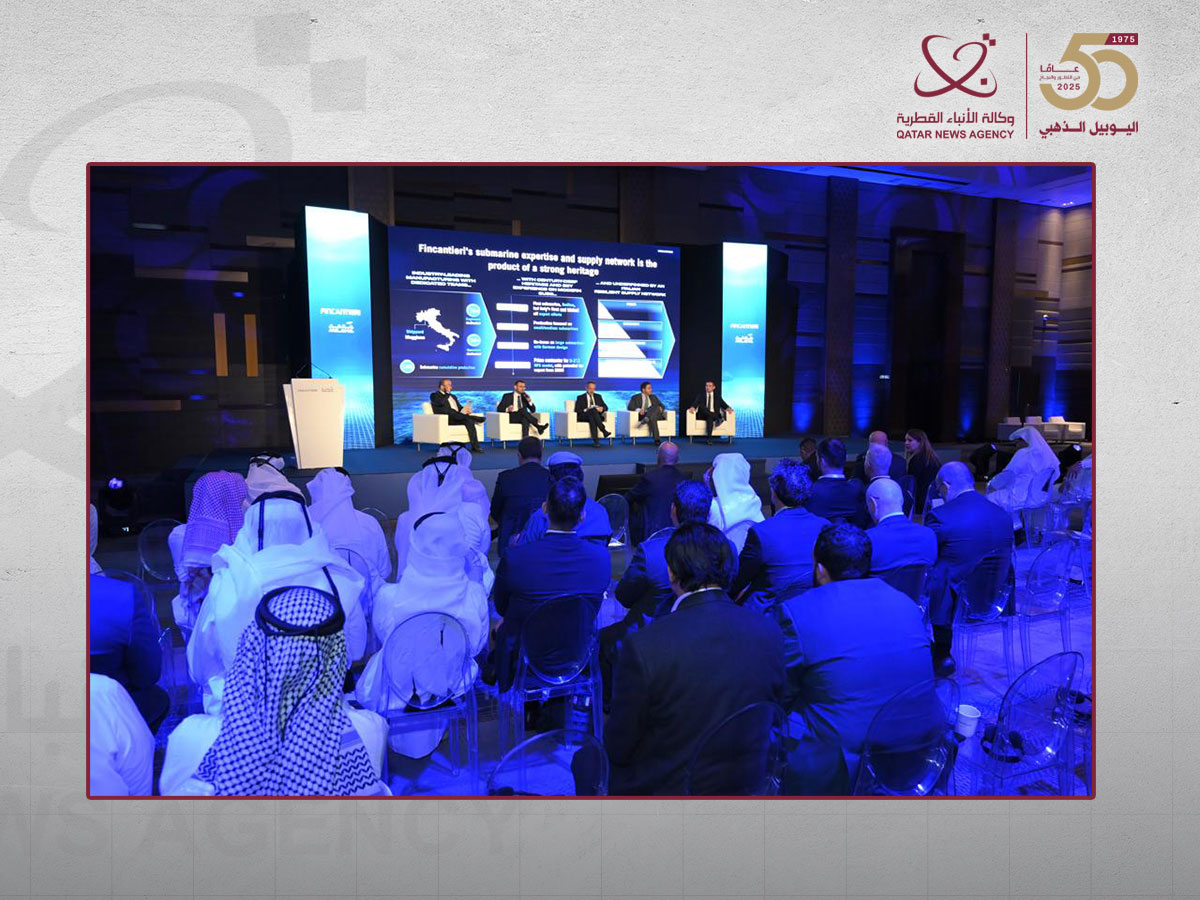
Addressing an event held within MWC2025 Doha under the theme "Inspiring Industry: Tech, Transformation and New Growth Rules," Al Sada emphasized that artificial intelligence has massively evolved, and accordingly, its embodied systems have risen throughout this evolution.
These are systems that embody artificial intelligence physically in the real world, such as autonomous vehicles, robots, drones, and many other forms of physical embodiment, enabling AI through this embodiment to interact with humans and engage with the real world in various ways, Al Sada highlighted.
He affirmed that this sort of technological development will have profound effects on industry, in terms of cost and effort reduction, adding that while some are still discussing Industry 4.0, folks are currently thinking about how to shape Industry 5.0, which goes far beyond that and includes embodied intelligence and super-intelligent systems.
The use of virtual reality, augmented reality, and similar technologies will lead to removing the barrier between the digital and physical worlds, which increases the complexity due to its effect on industry, and its impact on society should not be overlooked, Al Sada remarked.
Al Sada suggested that in order to fathom out this accelerating development, it is essential to understand some steps to comprehend the technological revolution and its impact on society, noting that the Japanese Cabinet provided a good framework in this regard.
It identified the first society, Society 1.0, which is a hunting society using basic hunting technologies, such as bows and arrows, and so on. The second stage is the agricultural society, where people settled, built cities, and used various tools for agriculture, he noted.
The third revolution, Al Sada elaborated, is the industrial revolution, which led to the development of mass production of tools and equipment and the provision of services on a wide scale in factories.
The fourth revolution is the Internet era revolution, which connects the Internet to people, establishes social media platforms, links systems together, and makes communication between systems extremely easy and fast, as it is often said, Al Sada highlighted.
He further indicated that the world has become a small village; therefore, there is a strong desire to pivot toward Society 5.0, which will integrate artificial intelligence in various forms, such as robots, different kinds of drones, and super-intelligent AI systems.
Al Sada emphasized the importance of shifting from a consumer mindset to a maker or producer mindset, affirming that if folks do not fathom out and create their future, it will be created for them, and they will always follow it. Therefore, folks must proactively shape their future in a way that reflects their values and preserves humanity.
He affirmed that the Qatar Center for Technological Innovations (Q-TIC) has taken modest yet profound steps to innovate future technologies that reflect its principles and preserve humanity, pointing out leveraging many of these systems in strategic projects in Qatar, including the FIFA World Cup, which incorporated smart mobility systems that have contributed significantly to its success.
He went on to emphasize that Qatar targets the future of Industry 5.0, and the center has already initiated the development of collaborative robots, for example, assisting small and medium-sized enterprises in the future to work in unison with robots and supporting them with the appropriate tools to reduce cost and effort.
Several participants in the same session discussed how advanced communication technologies, artificial intelligence, and automation, along with waves of transformation across various sectors -from manufacturing and mobility to finance and healthcare, among others - can foster the integration of digital infrastructure into physical systems, aiming to reach new levels of efficiency, intelligence, and responsiveness.
They affirmed that the artificial intelligence revolution, progressing at a rapid pace, will bring about a profound transformation in several fields, such as strengthening supply chains, operating autonomous vehicles, or reimagining patient care, as the technology reshapes the mechanisms of industrial operations, competitiveness, and growth.
Noteworthy, Industry 5.0 is, in fact, a new stage in the evolution of manufacturing, considered an addition to Industry 4.0, building upon the foundation established by these intelligent technologies.
While Industry 4.0 focused on connectivity, digitization, and automation, Industry 5.0 emphasizes the importance of collaboration between humans and robots, and the human-machine relationship, or what is referred to as collaborative robots. (QNA)